


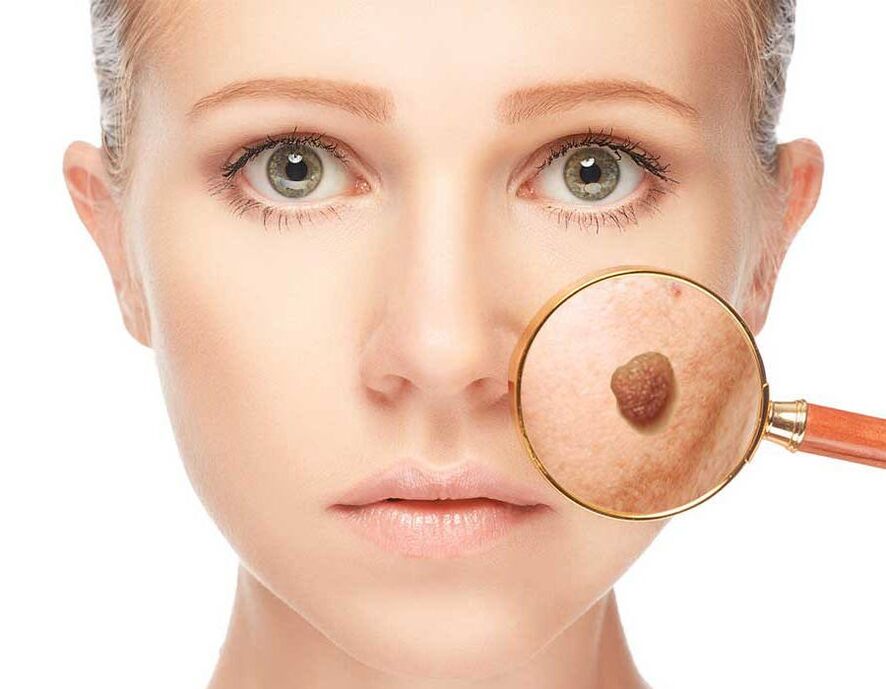
Human papillomavirus (HPV) is a pathogenic microorganism papillomavirus, the carrier of which is more than 60% of humanity.An intracellular parasite is a DNA molecule in a protein capsule.Having penetrated the human body, the DNA of the papilloma virus integrates with the genetic material of the cells.The virus becomes latent and from that moment the person is a carrier of HPV.The appearance of favorable conditions activates the dormant state of the virus, which provokes the development of new infected DNA cells (transcription) and the clinical appearance of specific neoplasms - papillomas.Of the existing isolated types of papillomavirus, some varieties, when transcribed, are capable of altering cellular genetics.Evolution of DNA-altered papillomavirus organism promotes uncontrolled division.The process of division forms tumor-like cells, which then develop as oncological processes.
Ways of penetration of the papilloma virus into the body
The main method of infection with the papilloma virus is close contact with a latent carrier or a patient with clinically pronounced symptoms.Based on the basic method of transmission of infection, several subspecies are distinguished:
- Sexual route of infection.Infection with the papilloma virus through microtrauma of the mucosa during any type of sex.Promotes the appearance of genital warts (warts) in the genital area;
- postnatal transmission of the papilloma virus (congenital infection).Infection occurs through the mucous membranes of the larynx or the genitourinary system;
- household infection.After entering the environment, the papilloma virus is able to maintain pathogenic activity outside the host for some time.The use of common household items, swimming in water bodies, wearing someone else's clothes and shoes significantly increases the infection;
- spontaneous infection.Transfer of the papillomavirus from one area of the body to another area of the skin.Infection occurs during hygienic procedures.
Clinical manifestations, symptoms and the main localization of the development of human papilloma depend on the place of entry of the virus into the body and the state of the human immune system.
In medical practice, cases of latent carriage of several varieties of papillomavirus have been recorded.The main symptoms of such a neighborhood can be the latent development of cancer.
Symptoms of infection with the papilloma virus, characteristics of the type of papillomas
The incubation period for bacterial activity depends on the resistance of the immune system of the infected person.The duration of this time period varies from a few days to 3-6 months.There are frequent cases of infectious activity of asymptomatic origin with high viral replication (simultaneous reproduction and surface formation of different species).
The further behavior of the papillomavirus strain in an organic environment depends entirely on the type of the pathogen.
The appearance of the characteristic symptoms of viral infection is preceded by a significant weakening of the protective forces of the immune system.At the site of bacterial penetration, an active concentration of modified DNA cells is formed, which provokes the rapid growth of the pathogenic area of the skin due to their division.The resulting formations are medical symptoms of the papilloma virus.
Types of subtypes of papillomas
- simple (vulgar).Group formations of a benign nature.It is easily identified and treated with surgical removal;
- flat (warts).A formation slightly protruding from the surface of the skin with small nodules on top, visually unsightly.Departure is advised immediately after submission;
- genital (condylomata).The formations resemble cauliflower in appearance;the growths have thin stems.Frequent damage to the formations due to the specific location leads to an increased risk of developing cancer.Removal is mandatory;
- filamentous (acrochord).Elongated and elastic flesh-colored sole formations on thin legs.If accidentally disconnected, they reappear.Most often, the doctor suggests surgical removal of the papilloma for aesthetic reasons.
The listed types of neoplasms are the most common due to the ease of initial visual diagnosis.
A more accurate diagnosis is made by a qualified specialist based on laboratory and medical examination data.
Medical diagnosis of papilloma virus
Often, the presence of active HPV is detected during a gynecological examination or when undergoing special tests to determine the type of the causative agent of the developing formation.The remaining diagnosis of infection is determined by laboratory tests for the presence or absence of immune cells-antibodies to a certain type of viral pathology, followed by the identification of viral DNA.
Methods for diagnosing the papilloma virus:
- Polymerase chain reaction (PCR).A very accurate method for diagnosing pathological formations.A small amount of biological substance (faeces or secretions of the patient) is used.The effectiveness of the method is based on copying a selected section of human DNA.This makes it possible to detect a single developing microbe.The method is suitable for determining the severity of the disease and predicting the outcome.
- Biopsy.Collection of biomaterial for histological examination.It is used to differentiate the formation and confirm the diagnosis.
- Colposcopy.Visual examination of the skin area affected by the formation with a special device with the function of optical zoom, photography and video recording.It is performed for the purpose of comparative analysis of affected tissues before and after treatment.
More often in medical practice, methods of biopsy and analysis of colposcopic data are used.Although there is a tendency for the papilloma virus to develop into an oncogene, modern medicine is limited to conservative or surgical treatment (removal of the formation).
Differences between papilloma and mole, condyloma, wart, melanoma
The most common type of HPV is papilloma.These are benign tumor-like formations of small size with a soft consistency to the touch.The shade of neoplasms is close to the natural color of the skin.Most often, the papilloma virus appears in women;men are characterized by hidden signs of pathogenic activity.Popular places for detecting papillomas are the neck, face and armpits.
A mole (nevus) is the result of the accumulation of the pigment melanin in nearby melanocyte cells.Places of formation are all over the body.They are round or elongated neoplasms, yellow-brown in color and do not change throughout life.Under the influence of direct ultraviolet radiation or physical trauma, it has a tendency to degenerate into melanoma.
Comparison table of characteristic differences between moles and papilloma
Criteria for differences |
birthmark |
papilloma |
| Structurality | dense, difficult | loose, soft |
| VESSELS | the vascular network is absent, it consists of skin cells | there is an internal vascular network |
| symmetry | symmetric | lack of clear symmetry of formation |
| outline | smooth surface | unevenness, torn surface |
| Color | the same color | the shadow changes |
| EDUCATION | they are inherited, they appear at birth | appear about a month after infection |
| Symptoms | No. | when it grows, itching, burning |
| Increasing | No. | QUICK |
| MAGNITUDE | up to 10 cm | up to 10 mm |

The localization of genital warts is characterized by limited places of penetration of the virus through microtraumas of the mucous membranes - external or internal genital organs.The detection of this type of papilloma virus in women can then provoke the appearance of a pathological formation (cancer) in the cervix.The growth of the same type of papillomas in men is localized on the head, frenulum of the penis.
One of the varieties of the papilloma virus - warts - are visually identified by their rapid growth, density of formation, characteristic shade (light yellow - brown), irregular shape and location.The predominant appearance of warts is recorded in the area of the upper and lower extremities.
The development of melanoma from the formation of the papillomavirus is determined by the characteristic visual signs - color, size, shape.There is an additional possibility of detecting the formation of melanoma - discharge from the formation, frequent inflammatory processes, accompanied by itching and severe pain.Malignant neoplasia has an uneven shade, expanded fuzzy borders with a diameter of more than 10 mm and a chaotic shape.
Human papillomavirus: major threats
Human papillomavirus infection is oncogenic.Pathogenic microbes, entering a healthy body, are capable of causing mutation of an organic cell in the form of a tumor-like formation, both benign and malignant.
Characteristics of cellular damage due to the action of the virus:
- failure of differentiation of the infected cell, loss of genetic functions and metabolic activity;
- initiation of intensive reproduction and growth of DNA pathogenic cells.
The appearance of pathological changes in the human body that weaken the immune system (decreased immune defense due to hormonal imbalance, frequent colds, instability of stress, during a period of severe illness) leads to the activation of the latent papilloma virus.This brings an additional burden to the weakened body and, as a complicating factor, the development of the malignant etiology of the neoplasm.
It is very important to consult a doctor at the right time when you notice the first signs of formations on the skin.A quick response will help to timely diagnose possible signs of a cancerous tumor at an early stage of formation and carry out appropriate treatment.
Treatment of papilloma at home (folk recipe)
The high effectiveness of conservative treatment of HPV at home is due to the rapid response to the appearance of a tumor.An enlarged papilloma is more difficult to treat with folk remedies.
Medicine calls celandine the most effective home remedy for papillomas.The plant contains natural phytoncides (antibiotics) and poisonous alkaloid derivatives (chelidonine, sanguinarine).Thanks to its chemical components, it has an inhibitory effect on the formation of pathogenic cells, destroying their structure.The affected area should be smeared only with freshly squeezed celandine juice.
Dangerous!
Since the plant is poisonous, its use at home in the treatment of papillomavirus should be extremely careful.
Vinegar creams with a crushed clove of garlic have a cauterizing effect on the formed papillomas.Garlic neutralizes pathogenic reproduction, and its acidic effect ensures its deep penetration into the formation.
The old-fashioned way to get rid of tumors - cauterization of papillomas with a diluted mixture of kerosene and iodine - is quite effective in the modern world.Castor and lemon oils also use acid cautery.

Methods for preparing oil for papilloma:
- Mix 9% vinegar with powdered eggshells and nutria fat.
- Grind the garlic to a paste-like state, add petroleum jelly.
- Grind the fresh celandine herb into a paste.Add petroleum jelly to the mixture.
The listed home remedies for fighting papillomas are very effective, but require careful treatment and a longer recovery period.
It is important to understand that with conservative therapy done at home, it is strictly not recommended to speed up the cauterization and healing processes by tearing off the crusts or intentionally damaging the wound.These manipulations are dangerous due to the introduction of re-infection with the development of the oncological course of the disease.
Removal of papillomas and what to do after the removal procedure
The complete removal of HPV is almost impossible, but it is quite possible for each person to alleviate his condition and get rid of aesthetically unpleasant, unpleasant formations.
Existing modern methods for removing papillomas:
- Surgical incision with a scalpel
A simple operation under local anesthesia.It does not require special preparation before the operation.High risk of scar formation after surgery. - The action of nitrogen
Treating the tumor-like formation with liquid nitrogen to supercool it.Chilled papilloma dries up and disappears spontaneously in a short period of time.Possible side effects - redness, poor circulation in the treated area. - Laser removal of papillomas
Laser removal is the most accurate and effective procedure.The method is based on laser vaporization of the papilloma according to the level of depth of its penetration into the skin surface.After the procedure, a hole appears at the site of formation, which disappears without a trace after two weeks.
Removal of formations is performed under local anesthesia.If the histological examination of the organic sample is favorable, the patient is released for outpatient treatment the next day.For the first two days after removing the papilloma, it is recommended to avoid getting water into the wound.It is also necessary to monitor the bark and prevent it from being accidentally detached.If the crust falls off without permission, the likelihood of healing the wound without the formation of subsequent scars increases significantly.
Treatment in the postoperative period should be carried out under the close supervision of the attending physician.The entry of water into the wound, unauthorized tearing of the crust, self-medication with ointments and lotions carries the threat of re-infection with the development of deep inflammatory processes or the formation of wounds at the site of removal.
Based on the current high cost of drug treatment, many patients wonder: is it really possible to cure papillomas with folk remedies?Statistics show that tumors caused by the papilloma virus can be easily treated at home if all precautions are taken.Especially in cases of the correct frequency of use of the useful properties of celandine.
When self-medicating, it is important to understand that not everything is useful when there is a lot.Sometimes it is better to apply the lotion several times and wait a little.If this treatment method suits you, within two days you will notice significant changes for the better.